
Geometry
Angle, lens, scale, cutaway
A section through the product, from the outside, with nothing taken apart.
TRANSFORM
AI visuals, CGI and motion — directed like a shoot, finished like a campaign.
The software is not the service. What makes one of these images usable is that the angle, the material, the light and the cut were decided by people who have art-directed real shoots.
What changes
Angle, lens, scale, cutaway
A section through the product, from the outside, with nothing taken apart.
Finish, grain, metal, glass
The same product in six finishes, identical in every other respect.
Direction, softness, hour
Evening light on a product that ships in winter.
Camera move, build, reveal
A move no rig in the room could hold.
Concept studies
Three AI-generated studies, made by CG iNK for CG iNK and art-directed here. They are not client campaigns, not 3D renders built from CAD, and not stills from a production — they are studies, and each one exists to show a different part of the judgement: how a product reads when it is opened up, how a material behaves under light, and how an object is placed in a real location.
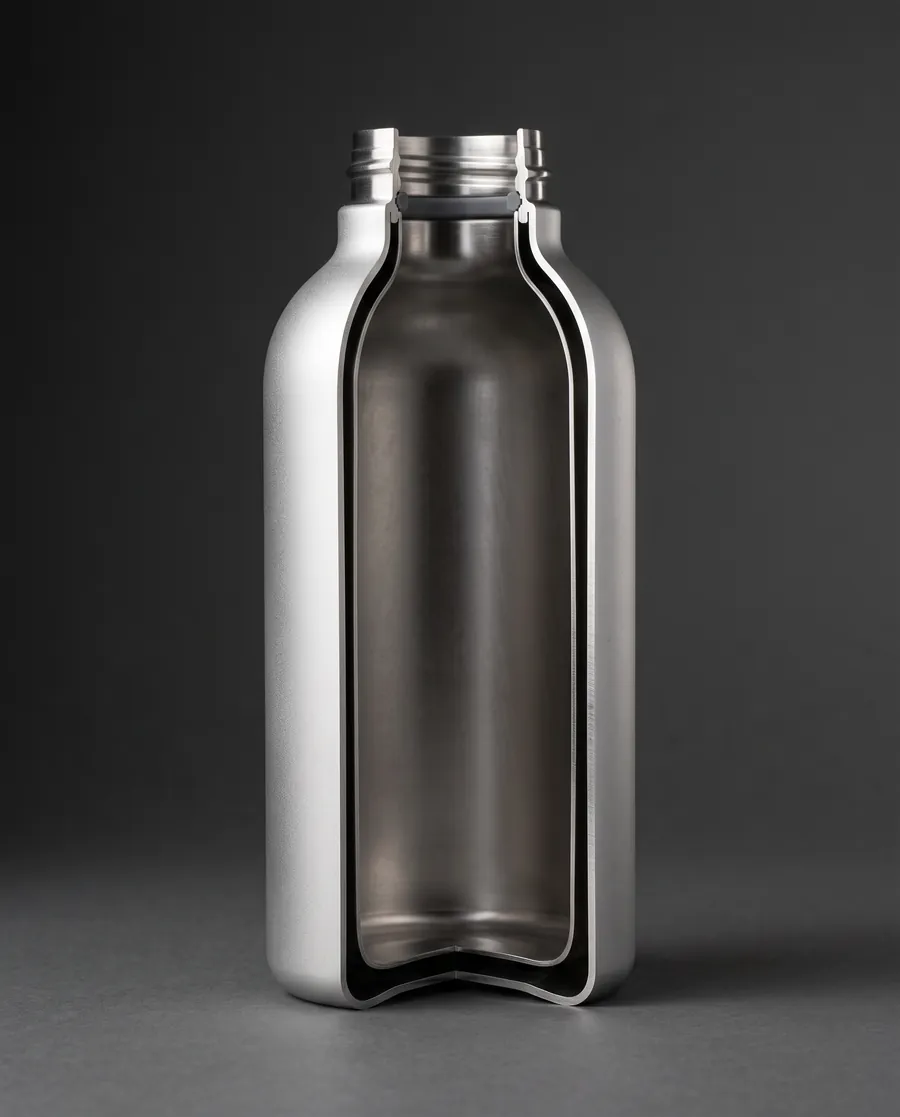
A product opened through its own wall: outer shell, inner vessel, the gap between them, the seal at the neck. An art-directed study of how a section should read, not an engineering drawing of a real part.
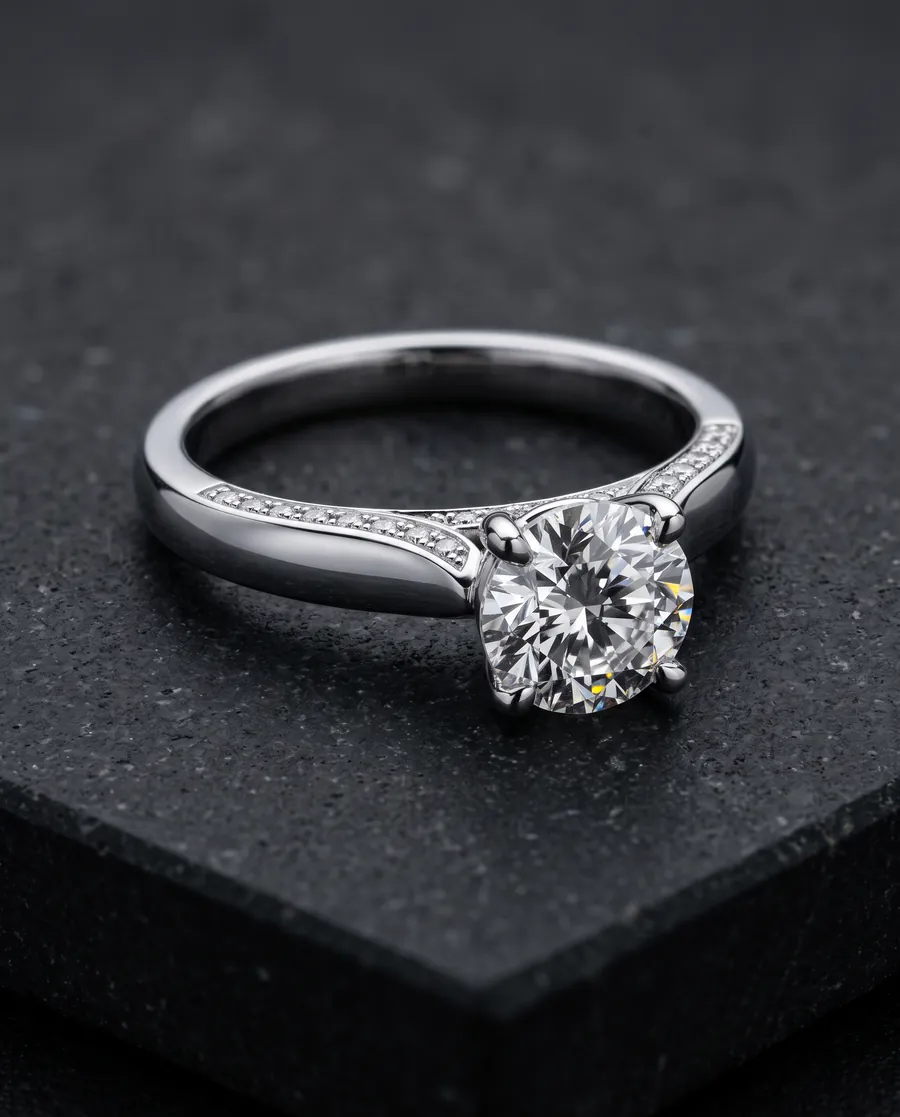
Metal and stone behave differently and have to be lit differently. The facets read as a pattern of bright and dark, which is how a real stone returns light — not as an even glow.
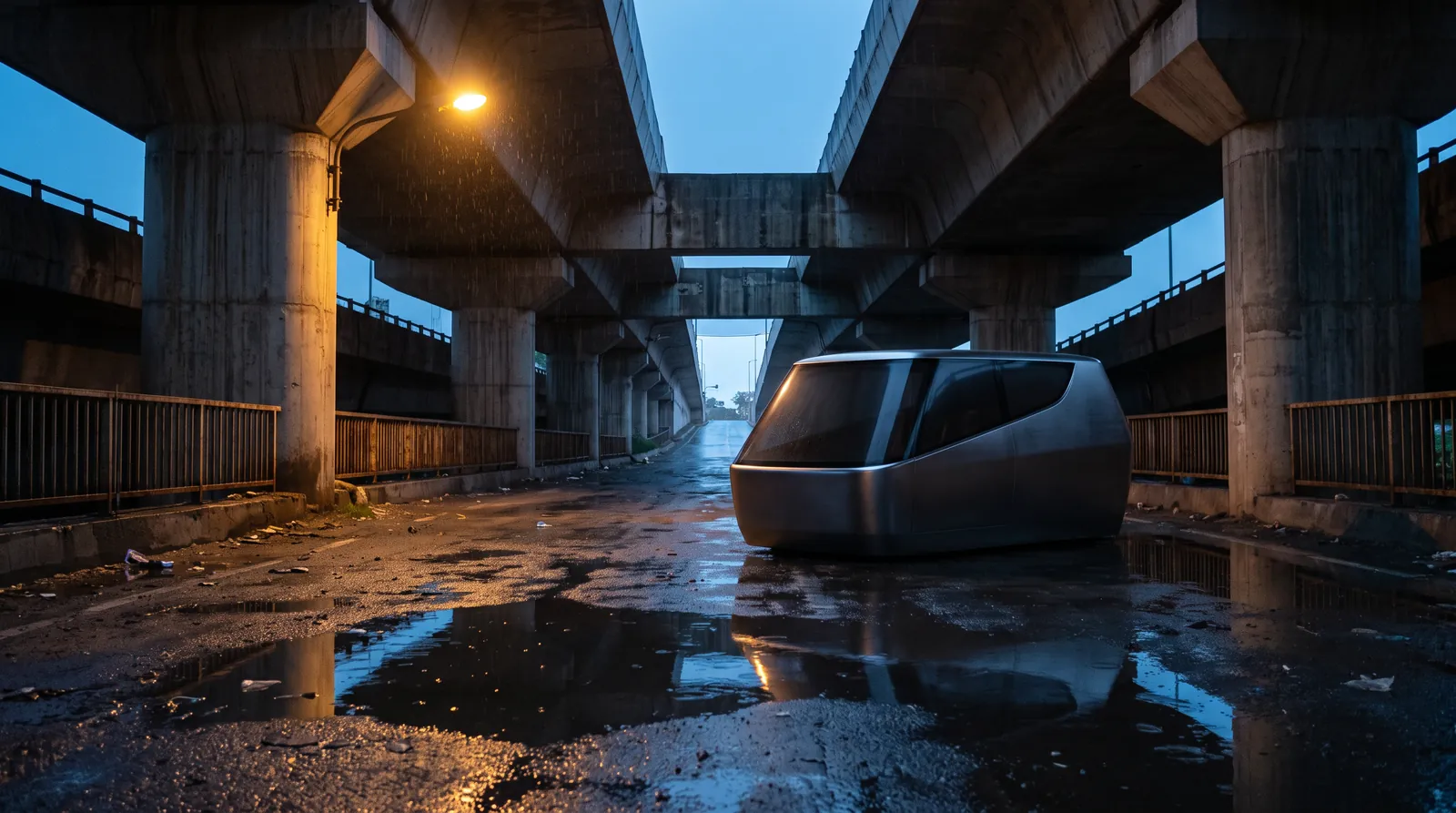
The hardest part of this work is not the object — it is making the location believe it. One sodium lamp, the last of the daylight, rain still falling through the light, and a reflection on the road that agrees with both. A single still: the lighting and staging a film would start from, not a film.
Client work is shown on the case studies and on the pipeline page, where the permission for each image is recorded. Studies like these are how the capability is demonstrated without putting a client's campaign where it does not belong — and they are labelled so nobody has to guess which is which.
Choosing
We run all three, which is the only reason we can tell you which one your job needs. Most campaigns end up using two.
People, food, texture you can taste, anything that has to be believed as a document.
Slowest, most expensive, most trusted.
Products that exist as drawings or moulds: any angle, any finish, any cutaway, repeatable forever.
Build once, then nearly free to change.
Volume, variations, locations and seasons — with the real product held to its exact shape.
Fastest. Needs direction and a real reference to be accurate.
Where exactness matters — a logo, a label, a stone setting, a profile section — the real product is the reference and it is held to it. Generation on its own cannot promise those, and we do not pretend otherwise.
What we make
Catalogue and campaign images of the real product, in places a shoot could not reach.
Catalogue and campaign images of the real product, in places a shoot could not reach.
The product built as geometry — so any angle, finish or cutaway is a decision, not a reshoot.
On-model imagery where the garment, the fit and the fabric have to stay right.
Stones, settings and metal held exactly as made, at a scale a lens struggles with.
What the frame needs and the location could not give it.
Motion built from the same assets as the stills, so a campaign looks like one campaign.
See it on real work
The pipeline page shows the stages on an actual project — what came in, what was decided, and what went out. Stages appear only where the real asset is cleared to be shown.
Production work
Jewellery & Luxury
Made AI visuals · CGI & motion
Food & FMCG
Made AI visuals
Jewellery & Luxury
Made AI visuals